


- Optimal ventilation ensuring product freshness
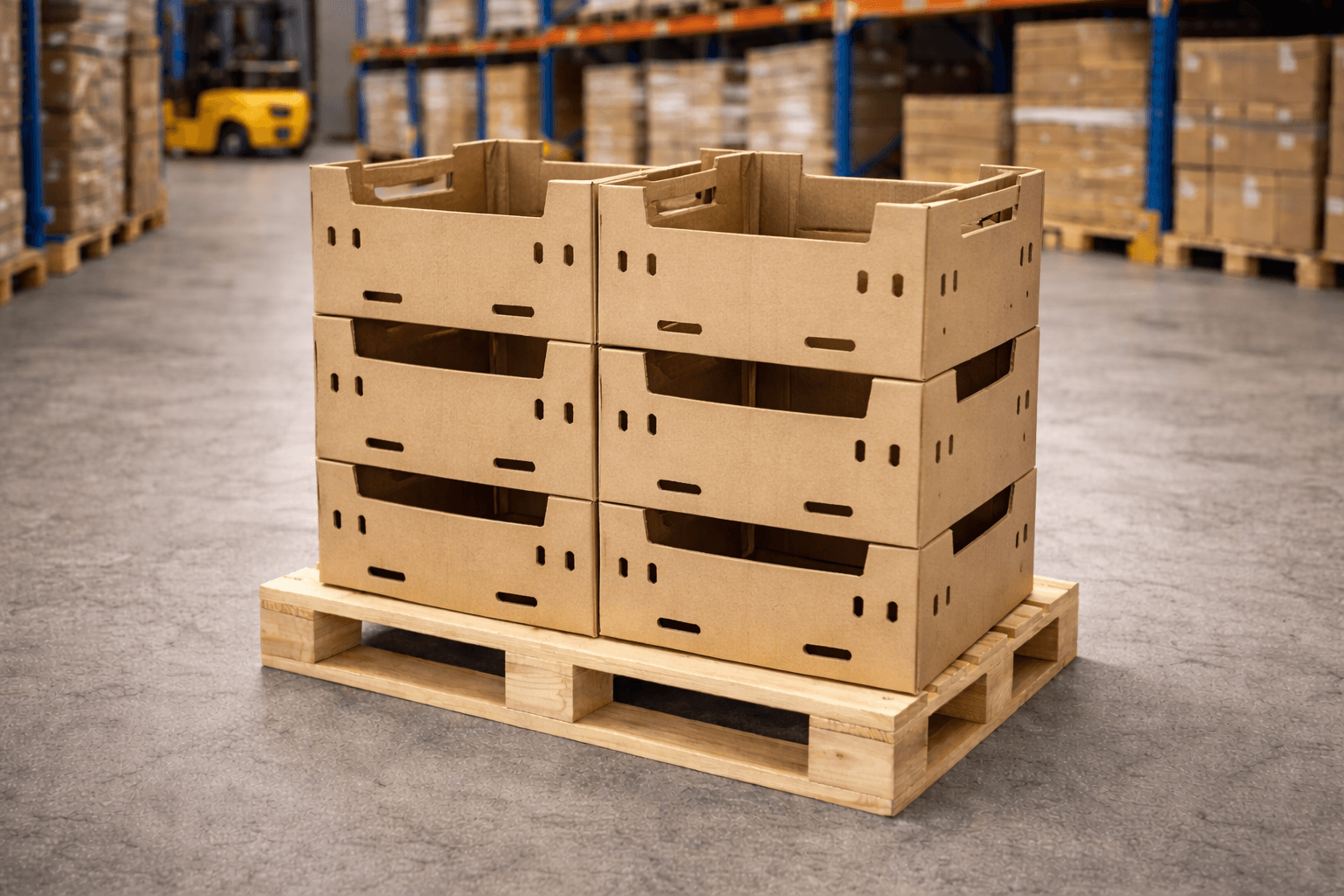
- High load capacity and stability when stacked in multiple layers
- Cost-effective and sustainable alternative to plastic crates

Key advantages:
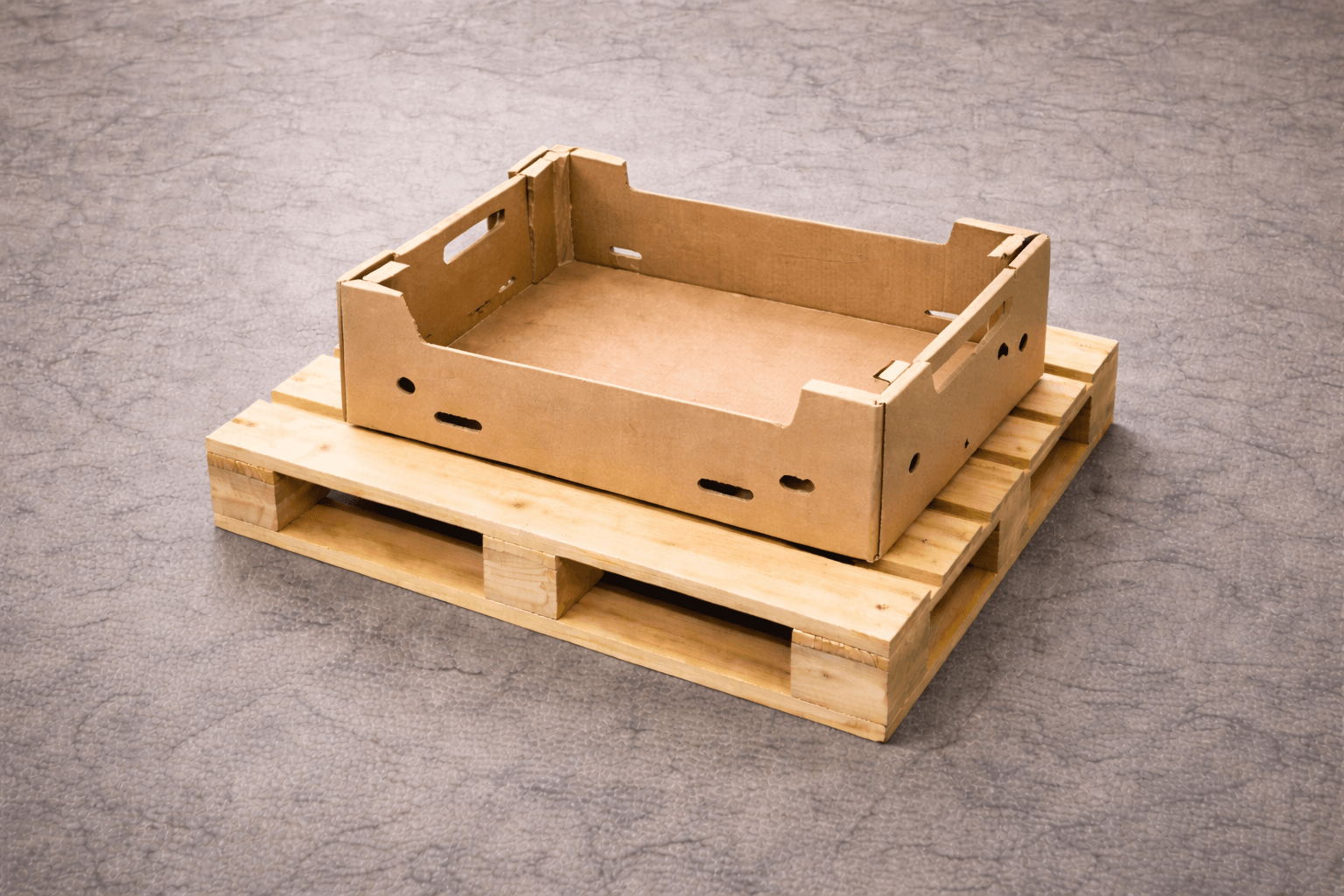
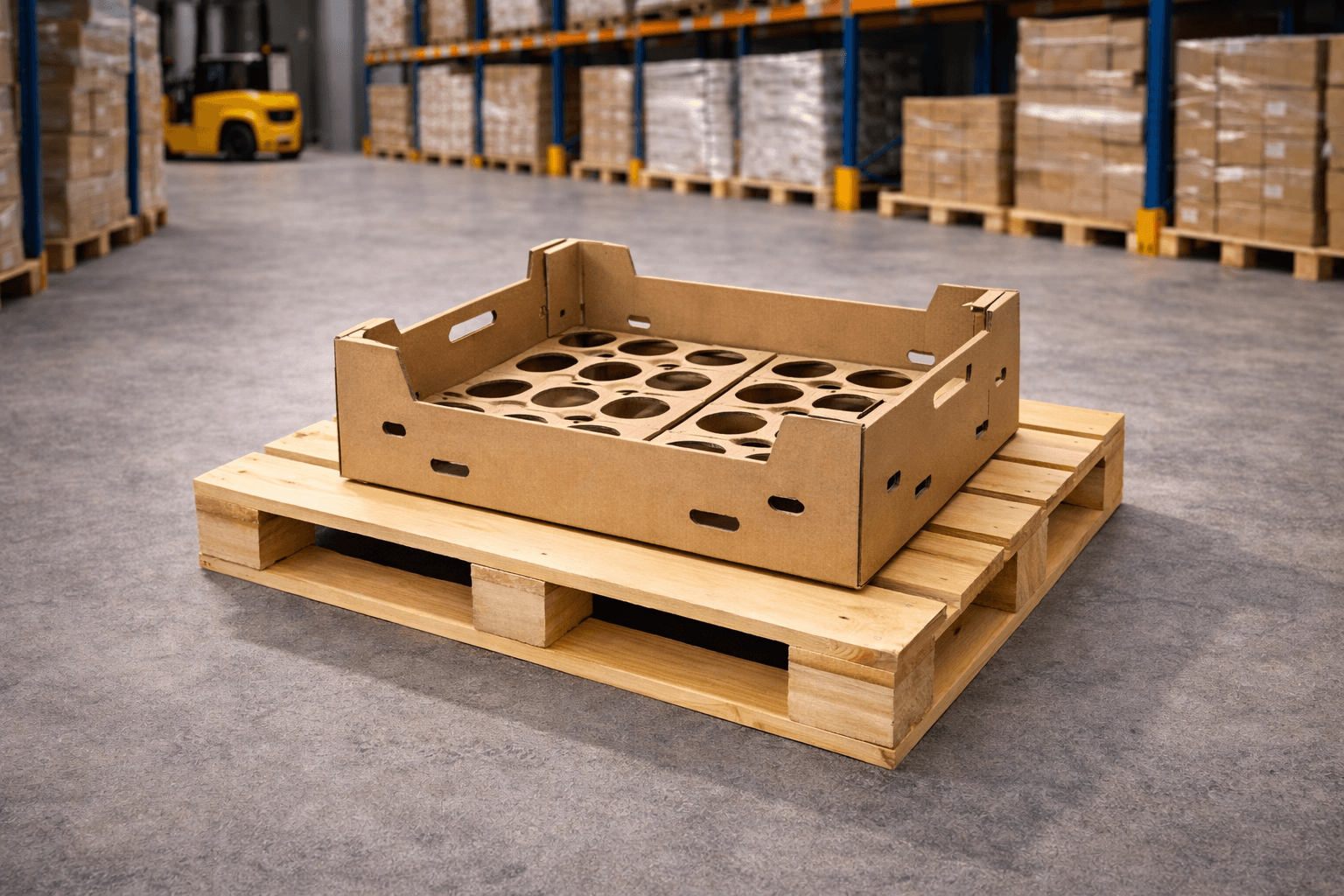
A die-cut corrugated box primarily designed for packaging fresh fruit and vegetables.
Thanks to ventilation perforations and a reinforced frame, it обеспечивает optimal airflow and stability during palletization. The products remain protected and easily accessible throughout storage and distribution.
Industrial usage:
Industrial usage
Fruit and vegetable distribution and export
Cold chains and food storage facilities
Retail bakeries, supermarkets, and kiosks
Transport of products sensitive to pressure and moisture
The packaging is designed to ensure safe storage and transportation of fresh food products.
Ventilation perforations allow airflow and moisture drainage, reducing the risk of spoilage. Thanks to its robust structure and stackability, it represents a standard solution for both domestic and international food markets. This box design also supports branded retail applications, providing added value for producers and distributors.
Key features
Cardboard crates treated with special coatings or manufactured from moisture-resistant corrugated board maintain stability even in cold storage facilities and controlled-atmosphere transport. These solutions prevent material softening and deformation that could compromise product safety. Enhanced resistance to condensation protects produce from excessive moisture and micro-damage. As a result, the shelf life of fresh goods is extended and the risk of spoilage during transport is reduced.
The crates are produced from robust multi-layer structures that provide excellent load-bearing capacity, even under heavy weight. The design enables stable stacking in multi-level pallet units, minimizing the risk of collapse. Products can be safely transported over long distances without packaging deformation. Stacking stability contributes to more efficient storage and optimal utilization of transport space.
Crates are designed with predefined perforations that ensure continuous air circulation.
This ventilation system prevents moisture buildup, slows spoilage processes, and preserves product freshness. Optimal airflow also supports temperature regulation during storage and transportation. As a result, the distribution of fresh fruit and vegetables becomes more reliable and consistent.
Crates are available in standardized formats compatible with logistics requirements and pallet configurations. At the same time, customized dimensions, ventilation patterns, and internal features can be developed to suit specific types of produce. This approach ensures maximum protection for each product, regardless of size or sensitivity. Tailored packaging improves packing efficiency and enhances the visual presentation of goods.
Our crates are designed in accordance with the standards of major retail systems and international regulations for fresh produce packaging. The construction and materials support compliance with certification requirements for fruit and vegetable exports. This ensures safety, traceability, and proper packaging labeling across global markets. Such compliance simplifies logistics and enables producers to access multiple retail and distribution channels with confidence.
Fruit and vegetables crates
Safe packaging that preserves product freshness and quality
Packaging for fresh fruit and vegetables must meet specific requirements in terms of moisture resistance, mechanical stability, and the preservation of product freshness and visual appeal.
Key features:
- Resistance to moisture and condensation
- High load capacity and stacking stability
- Optimal ventilation
- Standardized and custom sizes for specific types of produce (apples, tomatoes, peppers, etc.)
- Compliance with retail and export requirements
Resistance to Moisture and Condensation
Cardboard crates treated with special coatings or manufactured from moisture-resistant corrugated board maintain stability even in cold storage facilities and controlled-atmosphere transport. These solutions prevent material softening and deformation that could compromise product safety. Enhanced resistance to condensation protects produce from excessive moisture and micro-damage. As a result, the shelf life of fresh goods is extended and the risk of spoilage during transport is reduced.
High Load Capacity and Stacking Stability
The crates are produced from robust multi-layer structures that provide excellent load-bearing capacity, even under heavy weight. The design enables stable stacking in multi-level pallet units, minimizing the risk of collapse. Products can be safely transported over long distances without packaging deformation. Stacking stability contributes to more efficient storage and optimal utilization of transport space.
Optimal Ventilation
Crates are designed with predefined perforations that ensure continuous air circulation.
This ventilation system prevents moisture buildup, slows spoilage processes, and preserves product freshness. Optimal airflow also supports temperature regulation during storage and transportation. As a result, the distribution of fresh fruit and vegetables becomes more reliable and consistent.
This ventilation system prevents moisture buildup, slows spoilage processes, and preserves product freshness. Optimal airflow also supports temperature regulation during storage and transportation. As a result, the distribution of fresh fruit and vegetables becomes more reliable and consistent.
Standardized and Custom Sizes for Specific Produce Types
Crates are available in standardized formats compatible with logistics requirements and pallet configurations. At the same time, customized dimensions, ventilation patterns, and internal features can be developed to suit specific types of produce. This approach ensures maximum protection for each product, regardless of size or sensitivity. Tailored packaging improves packing efficiency and enhances the visual presentation of goods.
Compliance with Retail and Export Requirements
Our crates are designed in accordance with the standards of major retail systems and international regulations for fresh produce packaging. The construction and materials support compliance with certification requirements for fruit and vegetable exports. This ensures safety, traceability, and proper packaging labeling across global markets. Such compliance simplifies logistics and enables producers to access multiple retail and distribution channels with confidence.